Resources on Same-Sex Marriage

I know. I’m sorry.

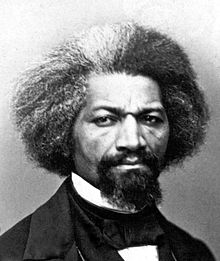
When you saw this post come up on your news feed, you probably thought, “Oh no! Not another preachy manifesto on the moral implications of same-sex marriage. Why does everyone with Internet access suddenly think they are the second coming of Frederick Douglass?”

Or perhaps you’re thinking that if you have to see one more red equals sign on Facebook, you might just go ahead and strangle somebody.

If either of the above categories represents how you’re feeling, that’s totally fine. I get it. I’m just about there myself, to be honest. Here’s the good news: I’m not going to add my own two cents—at least not right now. If you are interested in what I have to say, I have already written some of my own thoughts on same-sex marriage here and here.

Though these issues regarding same-sex marriage are important for Christians to understand and wrestle with, there also comes a point where it hits you all at once and you just need a break. So feel free to check out of the discussion for a little bit.

Put on a movie. Go for a walk. Read a book. Learn a language. Live your life and be happy! You don’t need to stay glued to your computer or television screen, worrying yourself silly about what the U.S. Supreme Court will decide. It’s okay to pull the plug for a while. But make sure you come back at some point. You can’t ignore this stuff forever.

For those who are interested in staying engaged right now, allow me to point you to some good resources for helping Christians think well about how to approach the same-sex marriage discussion with compassion, intelligence, and biblical faithfulness. I have read all of these articles this week and have found them helpful in my own thinking and discussions with others. Both of these articles deal with the causes and effects of professed Christians supporting gay marriage. Here they are:


Why the Arguments for Gay Marriage are Persuasive

Kevin DeYoung discusses five reasons why the arguments in favor of same-sex marriage are persuasive for many Americans, including young evangelicals.


When Did Idolatry Become Compatible with Christianity?

Joe Carter considers explores the current trend of evangelicals supporting same-sex marriage due to an idolatrous allegiance to the American ideal of civil liberty. Essentially, Carter argues that some Christians are in danger of abandoning biblical faithfulness for the sake of protecting the American way.


Note: If you are not familiar with The Gospel Coalition, you should be. The Gospel Coalition is a network of Christian thinkers that aims to equip evangelical with resources for thinking well about issues related to gospel ministry, the church, current events, and pop culture. You can check out their online resources here.


A Discusion on Religious Liberty

With the recent healthcare mandate put into effect by the Obama administration and the U.S. Department of Health and Human Services (HHS), there is a growing concern on the part of many that the American federal government has transgressed constitutional parameters guaranteeing religious liberty. In fact, many believe that the government is on a slippery slope toward obliterating religious liberty altogether.

The concern stems mainly from the provision in the HHS mandate which requires employers to offer their employees healthcare insurance that covers, among other things, abortifacients like the “morning after” pill. Any employer who fails to do so faces a stiff fine of $100 per employee, for each day of non-compliance. Aside from “houses of worship” (i.e. churches, synagogues, mosques, etc.), there is no exemption for religious organizations. That means that any “secular” employer who objects to the healthcare mandate on religious grounds is, well, out of luck.

Capitol Hill Baptist Church (Washington, DC) recently hosted a lecture about the HHS mandate and its implications on religious liberty. The keynote speaker was Kyle Duncan from the Becket Fund for Religious Liberty. The event also featured a response by Carl Trueman, professor at Westminster Theological Seminary.

Watch the full lecture here:

This is an important discussion about the trajectory of religious liberty in the United States. As we consider what it will look like to live in a civil democratic society with increased religious pluralism, it is vital that Americans grapple with what it means to remain faithful to our own beliefs–as unpopular as they may be in some spheres of society–while always seeking to preserve the freedom and dignity of those who disagree with us.

The Ministry of Hip-Hop

Last week, I had the opportunity to check out some of Christian hip-hop’s best performers as Reach Records’ Higher Learning Tour made its stop in Washington, DC. The headliner of the concert was LeCrae, with opening acts Propaganda, Dee-1, and comedian Bone Hampton. Not surprisingly, this concert exceeded my expectations. For me, it was a great mixture of old and new favorites.

Okay, full disclosure: I’m not the biggest hip-hop fan out there. In fact, I barely listen to it, even the Christian stuff. Yet even though I reside firmly behind the 8-ball when it comes to the Christian rap scene, I’m always encouraged to encounter faithful Christians who are using their talents to produce music that is actually very good. For too long, Christian music in America has just been downright bad. Hip-hop, has been no exception. Anyone who has lived through–nay, suffered through–the the 80’s and 90’s knows exactly what ‘m talking about.  I won’t even name any of the worst offenders, because I’m sure you already know who they are. And if you don’t, it’s probably best to spare you.

Thankfully, the past decade has seen the emergence of several Christian hip-hop artist who can go toe-to-toe with any mainstream, secular rapper out there. Not only have these artists become an acceptable alternative for Christians, but many of them have become the new standard for Christian music. The value of producing high quality Christian art is tremendous. On the one hand, Christians are being challenged to strive for excellence in their field and to understand the God-glorifying effect of a high work ethic in stewarding our gifts. On the other hand, non-Christians who would otherwise avoid gospel-centered art are encountering Christian art forms they actually enjoy, and as a result, man are wrestling with the truths of the gospel as never before.

So, who are some of these game-changing artists in Christian hip-hop? Well, if you are relatively new to gospel-centered hip-hop, perhaps it would be helpful for me to introduce you to the artists I saw the other recently at the Higher Learning concert.  Though this list represents only a tiny sample size of what’s out there, I think it provides a goo “starter kit” for you iPod.


lecrae

LECRAE

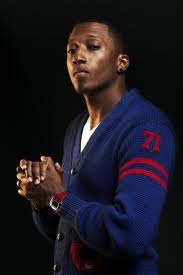
Hailing from from Houston, Texas, LeCrae has changed the game for Christian rap. Having spent much of his teenage years as a drug dealer and gang-banger, LeCrae brings a raw grit to his music in which he honestly recounts his past while celebrating the powerful, life-giving grace of God to save even the worst of sinners. LeCrae is credited as being one of the forerunners of the emerging Reformed Hip-hop movement. LaCrae has released six studio albums, including his 2012 release Gravity, which earned him a 2013 Grammy Award for Best Gospel Album.

MG’s pick: Falling Down (featuring Swoope & Trip Lee)


Propaganda-bw325x325

PROPAGANDA

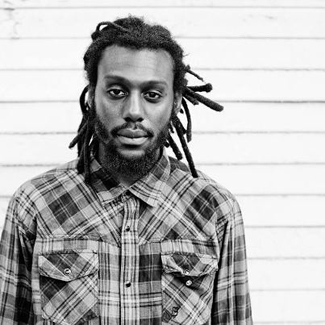
Propaganda is a Los Angeles based blend of spoken word, neo-soul, and old-school hip-hop. It makes sense, therefore, to know that he has shared the stages with the likes of KRS ONE and De La Soul. If one thing could be said about Propaganda, it is that he is authentic in every way. His music is a gripping exposition of the gospel and the vanity of life apart from Christ. Strap your helmet on tight. Propaganda doesn’t pull any punches.

MG’s pick: Lean


dee1_2

DEE-1

Born and raised in New Orleans, Dee-1 brings with him a transparency that is compelling from the start. Musically, Dee-1 offers a classic New Orleans rap flavor. But he packs a gospel-centered punch that leaves audiences with no doubt about where his hope lies. Dee-1 is already doing a lot through his music to proclaim Christ in some dark areas. If this guy keeps doing what he’s doing, I wouldn’t be surprised if he ends up joining LeCrae someday in the Grammy club.

MG’s pick: One Man Army


The Darker Side of Social Media

social-media

This month’s issue of ESPN the Magazine features a piece by Chris Jones exploring the impact of social media on those who struggle with depression. In his short yet penetrating article, Jones discusses the recent decision of professional tennis upstart Rebecca Marino to retire early due to her battle with depression. According to Jones, Marino cites not only the depression itself, but also the emotional wounds she suffered at the hands of cruel, unrelenting critics on Facebook and Twitter.

Jones reveals his own battle with depression and his sympathy for Marino’s plight:

“Unless the dark is the only place that feels safe. I’ve also battled depression, and I believe I know what or at least how Marino is thinking. I’ve thought a lot about giving up my job and vanishing — if I’m being honest, I’ve occasionally thought about vanishing in bigger ways too. When I’m in a good place, it seems insane to me that I’ve ever thought that way. My job is a dream job; my life is a dream life. But depression’s worst trick is its powers of distortion. It takes the good and makes it nearly invisible, and it takes the bad and amplifies it. People with depression also have long memories for hurt. Stings linger and layer.”

Jones then explains that his depression has, at times, been exacerbated by vocal critics, including one Twitter user who tweeted that he wished Jones would “eat a shotgun.”

This article is definitely worth a read, because it is a poignant commentary on the effect of the high-opinion, low-accountability, instant-sharing culture that has been created on the Internet, largely as a result of the prominence of social media interaction.

While social media platforms like Facebook and Twitter have made many positive and important contributions to different spheres of communication, commerce, and activism, they have also done their share of damage. Wherever people have the ability to instantly say whatever they want, with little or no accountability for what they say, there is both great opportunity and great peril.

For example, let’s consider Twitter for a moment. For me, one of the greatest benefits of Twitter is the ability to break news stories the moment they happen. In fact, many major news outlets have integrated Twitter into their normal communication strategies, encouraging consumers to tweet their questions, photos, ideas, and suggestions. It is clear that Twitter has revolutionized the way news media outlets do business.

At the same time, however, I cannot count how many “breaking news” tweets I have encountered over the past year that have turned out to be partially or entirely false. In such cases, we are left to grapple with the frustrating reminder that the First Amendment protects not only the distribution of information we find positive and helpful, but also that which is not so helpful, and sometimes even harmful.

Is Rebecca Marino a coward? Some would say so.  But I would suggest that she is the least cowardly of all in this sad narrative. While some would use technology to give full vent to their hatred and bitterness, Marino has had the courage to stare social media in the face–with all its commercial appeal and recreational allure–and disengage. Social media, Marino has decided, will not own her. It will not destroy her.

Contrary to what many of us–myself included–believe, social media is not an inevitable fact of life in a world saturated with instant e-communication. No, Marino has apparently decided that social media–and even her budding tennis career–can be discarded like everything else. Even in the digital age, there is more to life than staying connected.

Marino’s story is a reminder to us that real evil exists in the world, and it originates in the hearts of human beings. As much as we see and experience all the good contributions humans have made in this world–all the progress, all the philanthropy, all the peace initiatives, all the wonderful advances in medical and business technology–we are also faced with the reality that all of us, even the best of us, have within us a darker nature which compels us to do harm. And though we may insist on our good deeds and our honorable intentions–all of which may be true–none of us is immune from this corrupt nature the Bible calls sin.

Just as we see that human beings–made in the image of God and yet corrupt by nature–have a dual capacity for good and evil, we must also understand that the innovations of man likewise have a dual capacity to accomplish much good and much evil.

So what does this suggests about social media platforms? Are they evil in and of themselves? Are they to be avoided, or at least frowned upon, by those who wish to pursue righteousness? No, I do not believe that is the conclusion to be drawn here. Rather, we must grapple with the fact that the true source of evil exists within us. It comes from a heart that rejects the authority of the one true God in order to pursue our own selfish desires. Long before these heart desires reveal themselves in the form of vitriolic tweets or status updates, they grow up in our own hearts.

As such, social media is neither completely benevolent or malevolent. To the contrary, social media is a useful tool that can be abused. As such, the challenge for us is to exercise great care in how we use social media, recognizing that it can indeed become a grotesque platform for our sin.

This concept is not at all foreign to biblical Christianity. In fact, it is foundational to properly understanding the spiritual state of mankind in this world. Jesus himself affirms this in his teaching about what defiles a person:

“There is nothing outside a person that by going into him can defile him, but the things that come out of a person are what defile him…What comes out of a person is what defiles him. For from within, out of the heart of man, come evil thoughts, sexual immorality, theft, murder, adultery, coveting, wickedness, deceit, sensuality, envy, slander, pride, foolishness. All these evil things come from within, and they defile a person.”

– Mark 7: 15;20-23

Since Jesus is here offering a rebuttal for a false hope of righteousness from ritual purity, that is the primary point of the passage. But it also points to the broader principle that sin and righteousness are always matters of the heart, not merely physical things. Moreover, this world is filled with many things which, being neither inherently good or evil, require us to exercise much wisdom in our use of them.

In short, social media is not the problem. We are the problem.  However, social media–as Rebecca Marino can attest– is a dangerous weapon in the hands of sinners. As such, we cannot afford to partake of social media without reflecting on our own hearts. On a practical level, this could mean something very different for you than for me. But faithfulness to God–and simple human decency–demands that we handle social media with the utmost of care.
The Comeback Caps

Don’t call it a comeback! Actually, yeah, go ahead and call it a comeback—an impressive one, at that.

On Tuesday night, the Washington Capitals overcame a three-goal deficit to defeat the red-hot Boston Bruins in overtime. It was quite a treat for the rabid home crowd at Verizon Center in DC, and it’s sure to be remembered as a signature moment if the Caps make the playoffs.

It was a significant achievement for the Capitals, who trailed the Bruins 3-0 at the the end of the first period—a situation that has seemed all too familiar for this team as they have struggled through a sluggish start to this shortened season. And yet, to everyone’s surprise, the Caps fought back in the remaining 40 minutes of regulation to post three unanswered goals.

The Caps’ stunning comeback was punctuated by Eric Fehr’s spectacular game-winning overtime goal. Check it out:

fehr-goal

And here is the radio call by John Walton:

It appears there are yet signs of life for this Capitals club. It will still be an uphill battle to earn a playoff spot. But if the Caps continue to play the way they have in the past couple of games, there is reason for optimism.