Christianity is nothing more than a man-made religion created to assert some men’s supposed moral or intellectual superiority over others.
This statement, or some version of it, is an oft-repeated objection to Christian doctrine, and it is a postmodern idea that can be traced to the so-called “Age of Enlightenment” beginning in 18th century Europe and extending to other continents, including North America. For thoughtful Christians, however, this seemingly astute critique of evangelical Christianity rings hollow. Christianity, we understand, is not some man-made philosophical, social, or political movement. Rather, the faith we proclaim is from God.
As a pastor in mid-eighteenth century New England, Jonathan Edwards came face-to-face with this Enlightenment claim of the supposed man-centeredness of the Christian gospel. For Edwards, the claim was not merely an idle cheap shot at institutional Christianity. At stake was the very trustworthiness of the gospel message that Edwards and other Christians were aggressively spreading throughout the American colonies.
This perhaps at least partially explains Edwards’ sustained preoccupation with the nature of human salvation as an unequivocal work of the Holy Spirit, and not due to mankind’s moral or intellectual capabilities. Edwards understood the challenge presented by the emotionally ecstatic revivals of the Great Awakening that swept through New England. His answer to Enlightenment objections was both distinctly theological and deeply philosophical:
The Christian gospel is morally and intellectually superior to anything that human could ever invent.
In a 1733 compilation of sermons called The Wisdom of God, Displayed in the Way of Salvation, Edwards carefully unpacks the suppositions of the Christian doctrine of salvation and takes great pains to demonstrate how this is too lofty a philosophical worldview for man to have concocted himself. The only logical conclusion, explains Edwards, is that God himself is the author of the Christian worldview.
Here is what Edwards writes in one section:
The contrivance of salvation is of such a nature that no one can rationally conclude that man had any hand in it. The nature of the contrivance is such, so out of the way of all human thoughts, so different from all human inventions; so much more sublime, excellent, and worthy, that it does not savour at all of the craft or subtlety of man; it savours of God only. [1]
During the next couple of months, I will be engaging in some focused study on the life, thoughts, ministry, and legacy of Jonathan Edwards. Born in 1703 in East Windsor Connecticut, Jonathan Edwards has long been considered one of the preeminent evangelical Christian thinkers not only in North America, but the world at large. Among countless contributions to Christian thought and practice, Edwards’ legacy lies chiefly in his piercing, compelling exposition of the glory of God in the joy of the Christian. Additionally, Edwards is also widely appreciated for his focus on the powerful working of the Holy Spirit in creating spontaneous, unmerited, and surprising transformation of the human heart.
In 2003, John Piper gave an address called ‘A God-Entranced Vision of All Things: Why We Need Jonathan Edwards 300 Years Later.’ This is a great introduction to the theological and devotional legacy of Jonathan Edwards. As Piper suggests, Jonathan Edwards is a theological titan whose careful biblical reasoning is immensely useful for any serious student of the Bible, whether a pastor, theologian, or a critical scholar.
Click on the link above to listen to John Piper’s excellent summary of Jonathan Edwards’ legacy for the modern evangelical mind.
I’m not a pastor, but I hope the Lord calls me to serve in that role someday. As I think about what kind of pastor I aim to be, there are plenty of things that come to mind. But perhaps most important is this: I want every aspect of my ministry to be consistently shaped by God’s Word, not my own innovative ideas.
Yes, I know this might seem obvious. After all, the Bible is as basic to Christianity as wheels are to a bicycle. Anyone who is engaged in the work of the church should on the Bible as his main tool. It just makes sense, right?
Sadly, many pastors today do not share this philosophy. I am often seeing examples of churches whose worship, discipleship, and outreach are built on everything but the Word of God. Growth plans, snappy mission statements, cultural engagement, great music, nice facilities, etc. Though none of these are bad in and of themselves, they have too often been elevated to become the very engine which is supposed to power the church’s effectiveness and growth.
Oftentimes, the result is a sickly church that is not the clear gospel witness God has intended it to be. Either it’s an underachieving church that preaches the gospel yet never reaches its full disciple-making potential, or it’s an apostate church that fails to preach the gospel at all. Though it may well have begun as a well-meaning effort to be creative and practical, it foolishly neglects the greatest tool we have at our disposal—the Word of God.
How can we avoid, or even reverse, this trajectory of neglecting God’s Word? Ultimately, it is the whole church’s responsibility. But it starts with the leadership. The elders must set a clear tone of relying on the Bible to provide wisdom and direction in every aspect of the church’s life. Most fundamentally, the elders set this tone through teaching.
Along these lines, the most practical, foundational means by which elders can cultivate such a reliance on God’s Word is through expositional preaching—that is, preaching that plainly exposes the main point of God’s Word and makes that the main point of the sermon.
Who Sets the Agenda?
In expositional preaching, we aim to let the Bible speak for itself. This stands in contrast to a method of preaching in which we begin with our own presuppositions and then point to biblical passages that validate those presuppositions.
In some cases, the preacher routinely teaches on a series of topics, rather than preaching straight through books or sections of Scripture. Depending on the content of the sermons, this is not always the worst thing in the world. However, to do this habitually sets a precedent in which the preacher (perhaps in consultation with the elders) decides for himself what topics he thinks the flock needs to hear about.
Instead of plainly delivering to the people what God would have them hear, this preacher uses the Word as a platform for his own theological hobby horses. The result is that the congregation’s theological knowledge and interests only rise to the level of the preacher’s theological knowledge and interests.
By doing so, however, the preacher fails in his God-given responsibility to “rightly handle the word of truth” (2 Tim. 2:15). Why? Simply put, the preacher who primarily preaches topically is setting the agenda, rather than allowing God himself to determine what his people need to hear.
Getting the Vision Right
Furthermore, the pastor who only preaches topically runs the risk of building a church that is self-consciously united around a vision that is good but not ultimate. If you ask Christians today what their church is all about, many will say their church is most fundamentally about grace or justice or stewardship or love or community. These are all essential aspects of the church’s mandate, but not one of them on its own constitutes the entirety of what the local church is called to be.
However, churches that rely solely on topical sermon series tend to be more susceptible to the mistake of adopting a vision that is too narrow or theologically off-center. It is all to common for a topical-preaching church to be adamantly defined by a single theological concept while remaining weak in other essential biblical concepts. Again, this points back to the topical preacher’s tendency to teach his congregation only those things that he is most passionate or knowledgeable about.
A congregation that only hears sermons about God’s grace, for example, may not receive much robust, biblical teaching on God’s justice. Thus, grace becomes central to the church’s vision while justice is, at best, a peripheral concern. On the contrary, the congregation that regularly hears expositional sermons covering a variety of topics is much more likely to articulate a more comprehensive vision rooted in the worship of God Almighty and proclaiming his glory through the Great Commission (Matt. 28:18-20).
A church that is confused in its vision is likely to be confused in its theological understanding. The best way to prevent or correct such a problem is by offering the church a regular, well-rounded diet of perspective on all of Scripture, including the more difficult or lesser-known parts.
Is Expositional Preaching the Only Way?
Expositional preaching is predicated on the assumption that the Word of God should set the preaching agenda. So instead of a preacher presenting a sermon series on stewardship, he might just decide to preach a series straight through the book of Galatians and see what topics come up. Invariably, both the congregation and the preacher will encounter topics they might never have considered otherwise. As a result, the sermon becomes a tool to challenge and instruct the church in surprising ways.
To be clear, faithfulness does not necessarily demand book-by-book expositional preaching 100% of the time. In fact, it often does make sense to occasionally preach sermons or series that are more topical in nature. At times, the elders might use topical preaching to address particular challenges, circumstances, or questions facing the church.
Still, this should not be viewed as a replacement for a straightforward expositional approach. The main preaching diet a congregation is receiving should be expositional sermons. In order for a church to be all that it is called to be, there must be a firm commitment to understanding, obeying, and proclaiming “the whole counsel of God” (Acts 20: 27). As with many things in the life of the local church, this begins in the pulpit.
“Man’s chief end is to glorify God and enjoy him forever.”
-Westminster Shorter Catechism
Throughout history, Christians everywhere have largely understood their mission in terms of the all-encompassing motto Solo Deo Gloria (To God alone be the glory). Indeed, not only do we see this idea expressed in the creeds nd faith statements, but it is also a foundational concept in Scripture:
Whether you eat or drink, or whatever you do, do all to the glory of God.
-1 Corinthians 10:31
God’s glory is central to the Christian life. All of our theological study and our ministry efforts find their ultimate purpose in the discovery and proclamation of the supreme greatness of God. If we miss this, we miss everything. If life is a highway, God’s glory is always the destination.
Yet, if you’re like me, you might be asking a crucial question: Why? That is, why is God’s supreme greatness the centerpiece of the Christian life? Why is the aim of everything we do ultimately to point away from ourselves in order to point to God?
The answer is simple and yet profound: The reason we should do everything for God’s glory is that God himself does everything for his own glory.
God’s concern for his own glory is evident throughout the entire Bible. But let’s briefly turn to two passages where it is clear.[1]
In Throughout the Bible, we see a vision for living with God’s glory as the central motivation for everything we do. In everything we think, feel, and do, we must aim to reflect the supreme greatness of God. To focus our attention or efforts on anything other than this is to miss the point of why we were born, why we were saved, and why we do anything in life.[2]
Our passion for proclaiming God’s supremacy in all things is meant to mirror God’s own passion for that very same aim. As those created in his image, we exist to make much of God. That’s why we live. That’s why we were saved. That’s why we suffer. That’s why we prosper. That’s why we do ministry. God’s purpose in every part of our lives is that we use it to demonstrate God’s absolute sovereignty, goodness, wisdom, and power.
The Glory of I AM
What we see in Exodus 3:12-15 is revealing. While God is in the midst of declaring to Moses what he is about do for his people Israel—namely, rescuing Israel from slavery in Egypt and planting them in a better land of their own—God focuses the attention on his own name: I AM. The God of Abraham, the God of Isaac, and the God of Jacob. (cf. Ex. 3:14-15)
Within this name, we learn a lot about who God is and what he intends. The name “I AM” points to God’s eternal nature. There is no force that created God or causes him to continue living. He has no beginning and no end. He just is. He always was and he always will be. Period.
God goes a step further by indicating that he is “the God of Abraham, the God of Isaac, and the God of Jacob.” Not only does this give historical context to God’s self-designation as the eternal “I AM,” but it also points to God’s redemptive plan across the ages. God had previously made a promise to Abraham (Gen. 12:2-3) that he would give Abraham offspring and make him into a great nation through which all the nations of the earth would be blessed. Throughout the book of Genesis, we see God re-affirming and fulfilling this promise through Abraham’s son and grandson Isaac and Jacob.
So, when God connects himself to Abraham, Isaac, and Jacob, he is making a statement as to why he intends to save his people out of Israel. Namely, we see that God plans to save his people in order to display his own matchless power and promise-keeping faithfulness. God saves his people to show off his supreme greatness.
Pleasing the Lord
In Colossians 1:9-10, we see another example of God’s glory as the aim of his redemptive work. Here, the apostle Paul commends the Colossian church for their faith in Christ, and he articulates his prayerful desire that they would “be filled with the knowledge of his will in all spiritual wisdom and understanding.”
But Paul doesn’t stop there. He points out that the aim of this spiritual wisdom is “so as to walk in a manner worthy of the Lord, fully pleasing to him, bearing fruit in every good work and increasing in the knowledge of God.” (v. 10) In other words, Paul envisions that the ultimate aim of Christians joy and wisdom is to be directed toward living lives which reflect God’s holy character and give him pleasure.
God has saved us in Christ not merely for the sake of giving us joy and peace, but more importantly for the sake of our ability to display his supremacy through our total submission.
How Do We Miss It?
I am struck by how easy it is for me to forget this foundational truth that everything in my life must be for the glory of God. On the one hand, there is the gross tendency of my heart to live for my own glory. As much as I might outwardly deflect attention and praise, inwardly I crave it. When I serve in my church or in my home, I often do so with a deep-seated desire to be recognized and rewarded. And very often, this desire stands in direct opposition to any desire in my heart to make much of God.
When I err in this way, it is flagrant and overtly idolatrous. Instead of humbly submitting to God’s rule, I am seeking to oust God from his throne and rule in his place. Instead of encouraging others to adore God, I demand that others adore me.
On the other hand, there is another more subtle way that I sometimes fall short of living with God’s glory as my greatest aim. Sometimes I turn from God’s glory to focus on good, lesser things as ultimate. Salvation. Spiritual gifts. Relationships. Peace. Reconciliation. Hope. These are all wonderful things, and it is right for us to desire them and enjoy them. But they are not ultimate. All of these things come from God himself, and he gives them to us that we should recognize and declare his profound, unmatched greatness.
When God saves, he does so in order to display his perfect justice and mercy. When God gives us gifts, talents, and opportunities, he does so in order to equip us for drawing attention to his own supremacy in all things. When God calls us to deny put our sin to death and instead live holy lives, he does so in order to present us as a reflection of his own holiness. The whole point of Christian discipleship is that we always grasp the “in order to” in everything.
God’s passion for his own glory is what animates our passion for his glory. God will not settle for anything less than the greatest display of his glory. That is why he is so steadfast and unwavering in his justice. And it is also why he is so generous and relentless in his love for us.
This past Sunday night, my wife and I watched a documentary short film in which renowned evangelist Billy Graham presented what could very well be his last public address to the American public. In this half-hour long documentary called ‘My Hope America,’ Graham provides a clear, direct, and thorough explanation of the good news of Jesus Christ, with particular emphasis on human sinfulness and Jesus’ atoning death on the cross.
The film is clearly meant to convey the live-changing message of Jesus Christ, as well as celebrate the legacy of Billy Graham, one of the most effective and influential faith leaders the world has ever seen.
In addition to Billy Graham, the documentary features appearances by hip-hop artist LeCrae and singer Lacey Sturm (former lead singer of Flyleaf), both of whom poignantly share their own story of how their lives were transformed by putting their faith in Jesus Christ.
This film is a beautiful, inspiring presentation of the gospel story. And I can’t help but be thankful for the awesome mercy of God in the lives of those who seem the least worthy. That includes me. Regardless of who you are, where you come from, or what you’ve done, there is hope for live, joy, peace, and real change. And this hope is only in Jesus Christ.
I could elaborate, but I’d rather you watch this short film. Seriously, check it out and honestly consider the experiences shared and the claims made. It might change your life.
Do you struggle with anxiety? You’re not alone. Let’s face it—life is tough, and anxiety is a familiar experience for all of us, at least to some degree.
For some, anxiety is something that ebbs and flows with changing circumstances. The difficulty of our circumstances seems directly correlated to our level of anxiety. For others, it seems as though anxiety is the air we breathe—a constant feeling that accompanies us wherever we go. Even when things are going great, our happiness is tempered by a perpetual worry that our luck may soon run out.
That’s one of the tragic effects of anxiety. It poisons the well of gratitude and sows seeds of skepticism and doubt. Though we might never grumble against God out loud, we silently wonder in our hearts if God can really be trusted.
So is there anything we can do about it? Is there such a thing as getting rid of anxiety? Or is anxiety an inevitable experience that we should expect in our lives?
When we turn to God’s Word, we clearly see that anxiety is never considered a normal and acceptable for those who trust Christ. Throughout both the Old and New Testaments, God’s people are exhorted to reject fear and anxiety while joyfully relying on God instead (See: Josh. 1:9; Jer. 1:8; Ps. 56:3; Phil. 4:6; 1 Pt. 5:7).
In dealing with anxiety, one of the most oft-quoted biblical passages in amongst Christians is Matthew 6:25-34.
Here, Jesus warns his disciples against anxiety and encourages them to trust God. To illustrates his point, Jesus points to two examples—birds and lilies—noting that since God faithfully provides for them despite their own limitations, then he can certainly provide for his people whom he cares about even more.
For some, this passage provides immediate comfort and assurance of God’s provision:
God takes care of the birds and the lilies, so he will take care of me. Crisis averted. Praise God! Who’s up for some ice cream?
For others, however, it raises a troubling set of questions:
What about all the birds that actually do die of starvation? And how about all the flowers that dry up and die for lack of water and good soil? Aren’t those examples of God choosing not to provide? If so, how in the world am I supposed to take any comfort in Jesus’ examples of the birds and the lilies? How does Jesus’ logic hold up against clear evidence to the contrary?
These are certainly understandable questions, and there is a lot that could be said in response. But I think a careful consideration of the passage will help us respond to these questions with two truths.
1. Our earthly needs are secondary.
In Matthew 5 and 6, Jesus is explaining to a crowd of Jews the spiritual realities of God’s kingdom which is now being fulfilled in Jesus himself. Jesus’ main point is that the full scope of God’s divine reign and his dealings with sinful humanity go far beyond merely physical, external matters. Since the Jews were so prone to think of God’s law in strictly physical terms, Jesus corrects them by pointing out the deeper spiritual implications of specific commandments. Jesus then builds on this theme by pointing out that God recognizes and rewards unseen faithfulness, rather than focusing merely on visible piety.
Why is this important? It informs how we should understand Jesus’ illustration about the birds and the lilies. By pointing to the birds and the lilies, Jesus is not making a sweeping promise of physical provision. Instead, he is pointing out the absurdity of human beings worrying about something so secondary as food and clothing. Indeed, Jesus prefaces his birds/lilies illustration with a reminder that “life [is] more than food and the body [is] more than clothing” (Matt. 6:25). Physical needs are not the main point of life.
So what is the main point? In the very same chapter of Matthew, Jesus instructs his disciples to “store up treasures in heaven” (Matt. 6:19) and “seek first the kingdom of God and his righteousness” (Matt 6:35). In both cases, Jesus is offering a direct alternative to worldly concerns that lead to anxiety.
Here’s the bottom line: We don’t always understand our greatest needs. But God does. And in God’s perfect wisdom, he has determined that we’ve got more important things to worry about than where the next paycheck is coming from.
Of course, this does not dismiss the difficulty of financial lack and the joy of trusting God to meet those needs. But if worldly provision is our biggest concern, we are missing the real point of God’s provision for us—the gospel. Though we deserve God’s righteous wrath for our rebellion against him, God has provided Jesus Christ to live a perfect life, die in our place, and credit us with his own righteousness. And because Jesus rose from the dead, we have eternal life awaiting us even after our life on earth comes to an end. Through Jesus, God has provided us with direct access to himself—our greatest good—today, tomorrow, and forever. That’s amazing provision!
Even in the midst of worldly hardship, our greatest concern should always be believing God’s kept promises in Christ, while living to make him known and cherished.
2. God’s provision is outside our control.
Jesus also points out how ridiculous it is for us to worry about things we cannot control, which includes basically everything in our lives.
I know. Those bills you have won’t pay themselves. And so you’ve been busting your hump to earn a steady paycheck while keeping a close watch over every line item of your carefully-crafted budget each month. Doesn’t that suggest that you really are in charge of meeting your own material needs?
Well, yes. And no.
You see, God has entrusted us with various responsibilities in life, and it s crucial that we work wisely and diligently to steward them well. (See Prov. 13:22; Matt. 25:1-30; Lk. 16:11; 1 Tim. 6:17-19) But it is the height of foolishness (and arrogance) to conclude that we are the masters of our own destiny. Throughout the pages of Scripture, God makes it crystal clear that hes is in charge. Always.
Jesus himself alludes to this fact when he points out that the birds “neither sow nor reap nor gather into barns” (Matt. 6:26) and the lilies “neither toil nor spin” (Matt. 6:28). Yet in both cases, according to Jesus, God is the one who generously provides. Furthermore, Jesus notes that we human beings are incapable of sustaining our own lives (Matt. 6:27).
Anxiety is often an expression of pride. This might seem surprising, given that anxiety often feels like a natural response when we’re being victimized in some way (e.g. persecution, poverty, sickness, etc.). Yet in reality, the root of anxiety most often is a heart that, even if momentarily, is not believing God’s faithful character and his sure promises.
If we really believe in the God whom Jesus describes in Matthew 6, then anxiety simply does not make sense. Life is more than food and clothing. So much more. Life is about God—discovering and delighting in all he is for us in Christ.
The question is, why waste this life by being anxious?
As you may already be aware, something amazing happened on live television this past Sunday. Nik Wallenda, a seventh-generation member of the legendary Flying Wallendas daredevil family (ask your grandparents?), stunned millions of American viewers by walking on a tightrope across the Grand Canyon live on the Discovery Channel without any kind of safety mechanism.
In case you missed it, here is a clip:
Though I did not watch live as Wallenda crossed the Grand Canyon, I did watch a year ago when he pulled off the same stunt at Niagara Falls live on ABC.
Perhaps most interesting is how Nik Wallenda has appropriated his death-defying high wire adventures as an opportunity to proclaim his faith in Jesus Christ. As Wallenda gingerly made his way across the Grand Canyon, he prayed aloud for safety and repeatedly thanked Jesus for the amazing opportunity and the spectacular views. Immediately before and after the daring feat, Wallenda prayed on camera with his family and exulted in God’s faithfulness. For Nik Wallenda, this was clearly more than a brazen stunt. It was a platform to proclaim the glory of God.
Yet for those of us who have known God’s grace in Jesus Christ and therefore seek to live for the praise of God’s glory, Wallenda’s actions should raise some questions for us. Is Nik Wallenda being faithful or reckless? Should we be celebrating a husband and father who takes such breathtaking risks? Should Wallenda’s story inspire us to do similar things in order to gain an audience for the gospel?
I believe Scripture provides us with at least three broad principles for responding properly to these stunts and learning how to embrace both risk and caution for God’s glory.
1. Rejoice not as the world rejoices.
Firstly, we should be most entranced and captivated by the things of God, not merely the things of the world. The apostle Paul makes this clear when he admonishes the Corinthian church for their inordinate fascination with worldly wisdom and human heroes.
But God chose what is foolish in the world to shame the wise; God chose what is low and despised in the world, even things that are not, to bring to nothing things that are, so that no human being might boast befor God.
– 1 Corinthians 1:27-28
It comes natural to us to be wowed by the things that are impressive by worldly standards. And that’s not always a bad thing. But it is harmful when our enjoyment of worldly feats exceeds or obscures our enjoyment those things which God values. This wrong infatuation with the world is evidently what ailed the Corinthian church, and we are also vulnerable to the same phenomenon. Though we might often protest that our enjoyment of worldly delights is simply an innocent desire to partake in a little harmless fun or entertainment, there is always the danger that our hearts will be swept away by these things.
On the other hand, the things that should impress us most are often the very things which the world most overlooks or even despises. Just consider the fruit of the Spirit outlined in Galatians 5:22-23. On the hierarchy of things to get excited about these must be at the top. Yet for all the practical ways that we would practice these spiritual virtues, we will not often receive notoriety and public praise in the church, let alone in the world at large. Often the most godly among us are those who are quietly and humbly serving, without drawing much attention to themselves at all.
It’s not wrong to be impressed by amazing things that people accomplish in this world. And it is certainly true that our amazement at a spectacle such as Nik Wallenda’s high wire stunt can be redeemed as a broader enjoyment of God’s glory in the way he gifts human beings. But we must be thoughtful and vigilant about it. If there is no conscious thought of God’s glory, then there is probably no worship taking place. And that is always a problem! (1 Cor. 10:31)
2. Only gospel-driven risks are worthy risks.
Just as our enjoyment of the Wallenda stunt must be motivated by God-centered worship, so also the stunt itself should be motivated by God-centered worship. On the surface, Wallenda’s stunt certainly seems like a faithful act of death-defying worship. After all, it has resulted in millions of people being exposed to the gospel of Jesus Christ. But regardless of the gospel proclamation that has resulted, it is important that we not lose sight of the stunt itself in determining whether or not it was a good, wise thing for Wallenda to do.
On this point, it is helpful for us to consider the fact that Wallenda’s high wire stunt was enormously risky, while having little or no inherent societal value. What I mean is that there was no societal need that necessitated Nik Wallenda crossing the Grand Canyon on a tightrope. Was Wallenda delivering a backpack full of Bibles to an unreached tribe? Was he carrying supplies to build a well in an impoverished village? Was he trying to rescue someone who was stranded on a ridge of the canyon? No. He was simply doing it to prove that he could do it. And in the process, he placed himself and his family in a tremendously risky situation. With one strong gust of wind, Nik Wallenda’s children could be without a father today. And for what purpose? Our entertainment.
Scripture has much to say about exercising wisdom in our lives even as we take risks. Though we suffer, do not do so because of our sin (1 Pt. 1:17). Though we trust God, we do not put him to the test (Matt. 4:6-7). Although Nik Wallenda insists that his daredevil stunt is a testimony of God’s faithfulness to protect him and give him success, we must always remember that God gives us no such promise of material prosperity. Instead, God’s rock-solid promises to his people are for our spiritual prosperity through the atoning death and resurrection of Jesus Christ.
Thus, Wallenda’s theology in the matter bears some of the classic marks of the so-called “prosperity gospel.” It is fitting, then, that Wallenda was joined at the Grand Canyon by Joel Osteen, the poster boy for this wrong-headed focus on material blessing.
While I certainly cannot pronounce any definitive judgement on Nik Wallenda’s motives, his understanding of God’s faithfulness seems, at best, immature and, at worst, heretical. Though God does certainly bless us even when we do stupid, unwise things, we should not therefore engage in stupid, unwise things. Tempting fate does not give God the glory he is due.
3. Rejoice that Christ is proclaimed.
Okay, I have been rather hard on Nik Wallenda and his legion of fans thus far. But regardless of my deep concerns, I am grateful that it has in fact resulted in the proclaiming of Christ. I agree with the apostle Paul when he says the following:
What then? Only that in every way, whether in pretense or in truth, Christ is proclaimed, and in that I rejoice.
– Philippians 1:18
To be sure, the means by which Christ is being proclaimed could be more helpful. And Nik Wallenda could be more clear and biblically-rooted in his attempts to articulate his faith. Still, at the end of the day, I do take joy in the fact that millions of people heard Christ proclaimed on live television without censorship. And since that is becoming increasingly rare in our society, we should be all the more thankful when it does happen.
While we must be vigilant about theological precision, we must not be cynical. Instead, we must remember that God is powerful and faithful to use even the feeblest, clumsiest efforts of man to bear fruit for his kingdom. Perhaps, when Christ returns and we stand before him in judgment, we will find that Nik Wallenda’s high wire trek across the Grand Canyon resulted in sinners repenting and believing in Christ. Perhaps not. Either way, our hope is that God himself will use his Word to bring himself glory and build his kingdom.
I’m a bit late in posting this, but here is my reading list for this summer. Most of these are books I’ve been meaning to read for a long time but have never gotten around to it. So I’m hoping to finally tackle them this summer. As usual, this is not an exhaustive list, nor is it in particular order. Reviews may be forthcoming, so stay tuned.
Let me know if you have any feedback on these books or any recommendations for additional titles.
Cheers!
SCRIPTURE
The Gospel of Luke
Philippians
1 Peter
2 Peter
Galatians
Genesis
Isaiah
Proverbs
THEOLOGY
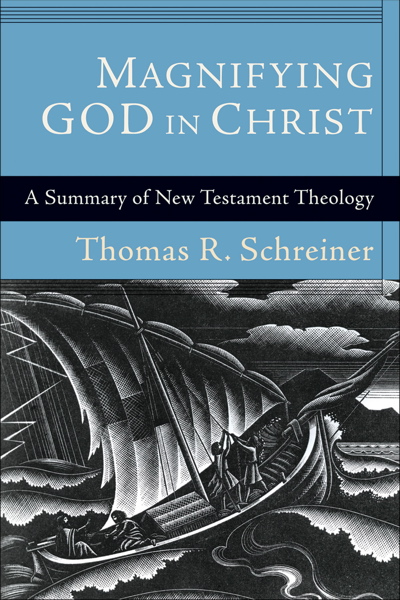
Magnifying God in Christ (Thomas Schreiner)
Biblical Theology in the Life of the Church (Michael Lawrence)
I’ve always said that sports reflects culture. If there are certain worldviews and trends that seem pervasive in other sectors of mainstream society—government, media, pop culture—we will usually see them appear in sports as well. Right now, this theory is once again being validated.
On Monday, NBA basketball player Jason Collins announced publicly in a Sports Illustrated article that he considers himself gay. To many people, this was inevitable and long overdue—not that Collins himself would announce he is gay, but that someone currently playing professional sports would make this announcement. After all, the thinking goes, homosexuality is normal and natural. Surely, someone somewhere in a professional sports uniform is silently living as a homosexual, and eventually they will come out. We don’t know who it is, and we don’t really care. We just want someone to do it.
Well, the inevitable has finally happened. His name is Jason Collins.
Yet for all this, there was a second inevitability, dependent on the first. Just as there had to be a hero who had the “courage” to wear his homosexuality on his sleeve, there also had to be a villain who was despicable enough to publicly disagree with and even condemn the hero’s declaration. Well, we have our villain—Chris Broussard.
Following Collins’ announcement yesterday, ESPN basketball analyst Chris Broussard was asked on camera to comment. Why Broussard? Well, the obvious answer is that he is an NBA analyst and this is an NBA story. So it makes sense, right? But it quickly became clear that there was an even more specific reason ESPN chose Chris Broussard—and not, say, Jon Barry—to comment on Collins’ coming out.
You see, Chris Broussard has been very open about the fact that he is an evangelical Christian. That is, Broussard believes the gospel is uniquely true and that the Bible has complete authority. Most importantly, he has turned from willfully sinning and is trusting Jesus Christ alone for forgiveness and reconciliation with God.
So, when Jason Collins announced his homosexual lifestyle, ESPN saw an opportunity that was too good to pass up. On Monday’s edition of ESPN’s Outside The Lines, Broussard was asked to comment on Jason Collins’ claims to be both homosexual and a Christian. And here is how Broussard responded:
It is striking that when confronted with the question of homosexuality, the first words out of Broussard’s mouth are, “I’m a Christian.” He then provides a cogent summary of the Bible’s stance on homosexuality and unrepentant sin in general, noting particularly that the Bible expressly forbids people living in open sin and yet claiming to be Christian. As he makes the biblical case, Broussard registers his own assent to the Bible’s teaching. For Broussard, his stance on the matter is the Bible’s stance. For Christians, it can be no other way.
Not surprisingly, the backlash against Broussard has been sweeping and vitriolic. On Twitter, Broussard has been called almost every derogatory name one could imagine—many of them too heinous for me to repeat. Among his sports journalism peers, Broussard has been ostracized, with many people calling for him to be fined, suspended, or even fired. Indeed, the pervasive “tolerance” movement is once again driving its stake in the ground, just as it has done on so many other matters. And each time, the rhetoric is more extreme, more hateful—more intolerant to the minority who does not share the views of the majority. The irony is deep here.
But what is perhaps most interesting about the Collins-Broussard situation is the position of professional sports as an emblem of progress, or lack thereof, in society as a whole. What is true in sports must be true in society, and vice versa.
To be sure, there are many who desperately reject such a notion. Sports, it is thought by some, is one of the few spheres of public life in which one’s views on matters like race, religion, and sexuality are completely irrelevant. But we know better than this. For as the public debate over same-sex marriage has continued to heat up, there has been an increasing ground swell of people in sports clamoring for a brave soul who will finally break the “sexuality barrier” and become yet another powerful public symbol of America’s inevitable march toward complete normalization and integration of the homosexual lifestyle.
In order to finally achieve our ultimate aims, we need symbols—people, events, or objects that show us and those around us that our cause is authentic, legitimate, and achievable. On April 29, 2013, Jason Collins became that symbol in the realm of sports. The same-sex agenda already has its public symbols in the film, television, and music industries. The political sector has also provided its own share of high-profile symbols.
The only shoe that hadn’t dropped yet was sports. Advocates of same-sex marriage needed a public, high-profile symbol in one of the “big four” sports (i.e. football, basketball, baseball, hockey). And they got it. Make no mistake about it: Jason Collins now stands for something much bigger than himself. For many people in this country, he has become a living, breathing sign post that says same-sex attraction is normal, legitimate, and demanding of full, unqualified acceptance.
If Jason Collins is a symbol, then there is a flip side to that coin. Chris Broussard is also a symbol. When the news of Collins’ announcement became public, ESPN jumped at the opportunity to record a dissenting opinion from within the realm of sports. Why? Because every hero needs a villain to highlight the moral virtue of the hero’s cause. And that’s precisely what has happened. Broussard had barely finished articulating his position before hordes of people took to social media to register their moral outrage. For the mainstream pro-gay agenda, Broussard’s statement was a gift. It has served to further galvanize an ever-increasing consensus in favor of embracing the “tolerant” same-sex agenda.
For Christians, Broussard’s plight is a stark reminder of what we already know. That is, the era of Christian privilege in America has come to an end. We Christians have become a despised minority. It appears we are now entering a period of unprecedented marginalization of evangelicals in this nation. A clear line is being drawn right before our very eyes. More and more, the biblical worldview will be considered categorically incompatible with American ideals. As a result, there will no longer be a place in American public life for those of us who believe in the supreme authority of the Bible and the unique truth and saving power of the gospel.
Thankfully, God’s Word has prepared us to face such opposition:
Blessed are you when people hate you and when they exclude you and revile you and spurn you name as evil, on account of the Son of Man! Rejoice in that day, and leap for joy, for behold, your reward is great in heaven; for so their fathers did to the prophets.
– Luke 6:22-23
Though Jesus here was speaking directly to a crowd of Jews in the first century, the lesson applies to us today. Following Christ and opposing unrighteousness will get you hated. And when that happens, remember your heavenly reward and let that be cause for joy. God himself is our great reward, and he is worth all our allegiance, even when it costs us everything in this world.
I applaud Chris Broussard for taking a courageous stand for biblical truth in the midst of vehement opposition. His struggle is our struggle. He is a pronounced symbol for what we will now face every day in every place. Yes, he is a symbol. But what our mainstream society has intended to be a symbol of our defeat, is actually a symbol of our joy-filled suffering in anticipation of the ultimate vindication of our righteous cause.








 FREE INDEED