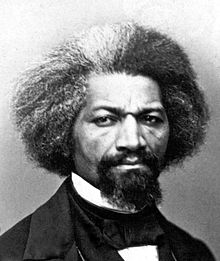
There is a new civil rights movement underway in the United States of America.
At least, that’s what many proponents of same-sex marriage would have us believe. Among those Americans who support the legalization of same-sex marriage in the United States, one common line of reasoning and rhetoric involves drawing comparisons between the current battle over gay marriage and the civil rights movement of the 1950s and 1960s.
Some, like David Badash who writes for a pro-gay marriage blog called The New Civil Rights Movement, are quite explicit in the comparison they draw. In a recent article, Badash writes in a matter-of-fact tone that “there is no valid reason to oppose same-sex marriage, just as there is no valid reason to oppose interracial marriage.”
Do you see what Badash is doing here? He is attempting to portray gay marriage as an issue that essentially boils down to basic fairness and humane treatment of an oppressed, marginalized minority. By Badash’s logic, the very same issues that lie at the heart of racial prejudice and discrimination also lie at the heart of the debate surrounding same-sex marriage.
The implication is clear: If you support racial equality, then you must also support same-sex marriage. After all, they are really just two sides of the same coin. Moreover, those who oppose same-sex marriage while supporting racial equality are not only bigots, but they are the worst kind of bigots—hypocritical bigots.
While I understand much of the underlying logic of the comparison between same-sex marriage and the civil rights movement, I see one major problem with it: it is downright wrong. Period. When it comes to issues of morality, human decency, and equality, there are no legitimate grounds for comparison between the campaign for same-sex marriage and the civil rights movement.
If this is true, then why do so many people insist on drawing this comparison? Well, I think the comparison is often rooted in any number of faulty assumptions with regard to same-sex attraction. Allow me to address just one of these assumptions here.
Desire is Destiny: I was born this way
In her recent song “Born This Way,” pop singer Lady Gaga expresses the pervasive spirit of our age:
Don’t hide yourself in regret,
Just love yourself and you’re set
I’m on the right track, baby
I was born this way
Lady Gaga continues later in the song:
No matter gay, straight, or bi
Lesbian, transgendered life
I’m on the right track, baby
‘Cause baby, you were born this way
Notice the logic articulated in these lyrics. Since we all possess personal attributes that we did not choose, and therefore cannot change, we should never be restricted from pursuing actions and lifestyle related to these attributes. Some even go a step further and suggest that these attributes have been given to us by God, and so therefore it is God’s design that we live it out without embarrassment.
Whether it’s race or sexual orientation, or anything else, it’s who you are. Do not try to change, and do not let anyone treat you differently. God made you that way, and you can’t change that. So embrace it, and don’t try to change who you are.
Hence the supposed connection between same-sex marriage and racial equality. The prevailing assumption is that same-sex attraction is as fundamental to a person’s identity as their ethnicity. You didn’t choose it, and you can’t change it. Therefore, to deny an individual the right to legally marry simply because of their sexual orientation is just as unjust as denying an individual the right to vote simply because of the color of their skin. Discrimination is discrimination, no matter how you slice it.
However, there are several flaws in this logic. First, it is simply naïve to assume that we are not held accountable for desires that we did not choose. Conventional wisdom in our postmodern society says we are only responsible for the things we consciously think, decide, or do. But Romans 1 tells a different story.
For the wrath of God is revealed from heaven against all ungodliness and unrighteousness of men, who by their unrighteousness suppress the truth. For what can be known about God is plain to them, because God has shown it to them. For his invisible attributes, namely, his eternal power and divine nature, have been clearly perceived, ever since the creation of the world, in the things that have been made. So they are without excuse. For although they knew God, they did not honor him as God or give thanks to him, but they became futile in their thinking, and their foolish hearts were darkened.
-Romans 1:18-21
This is what we Christians call Total Depravity. It means we were all born with two things: (1) an inherent knowledge of God’s nature, majesty, and righteous standards; (2) a corrupt heart and mind which do not acknowledge and submit to God’s nature, majesty, and standards.
This is true for all of us. And guess what? We did not choose to be born this way. But the fact that we did not choose it does not mean God does not hold us accountable. That much is clear in the above passage. Rather than letting human beings off the hook God reveals his wrath.
This is instructive for us Christians in how we relate to the gay community. We need to recognize that the debate over whether same-sex attraction is a choice actually misses the point! Regardless of whether same-sex attraction is a choice, it’s still sin, much like pride is a sin even though I don’t really choose to be prideful in my heart. And like every other sin, we must turn away from it and trust in Jesus Christ who died on a cross to bear the righteous wrath of God.
Same-sex attraction, it appears, is not always a choice. But we Christians have a theology that can handle that. Instead of insisting homosexuals are willfully choosing to be attracted others of their same sex, we should plead with our homosexual friends to turn away from these desires—rather than acting on them—and ask God to forgive them in Christ and help them change by the power of the Holy Spirit.
Ethnicity, on the other hand, is morally neutral. In other words, it is not a sin to be black, white, Hispanic, Asian, or any other ethnicity. On the contrary, God has created us all with particular ethnic backgrounds in order to display his own beauty in the diversity of his creation. As human beings created in God’s own image, we are all endowed with a certain kind of inherent dignity and respect.
The civil rights movement was about upholding and affirming this inherent dignity of all human beings, regardless of ethnicity. Courageous men and women of all ages and ethnic backgrounds gave their lives to fight for this kind of equality because it is good, right, and just. In various places in the world—including in our very own country—this fight continues, and it is always a battle worth fighting.
The gay marriage movement is about making room for sinful lifestyles under the guise of tolerance and equality.
The distinction between these two movements is of vast importance, and we must be crystal clear about what is at stake in both. Let us be valiant in our pursuit of justice for the oppressed and marginalized, but always standing for truth. God has not called us to compromise.


 FREE INDEED